

Blog
How to Plan a Community Consultation Video That People Trust
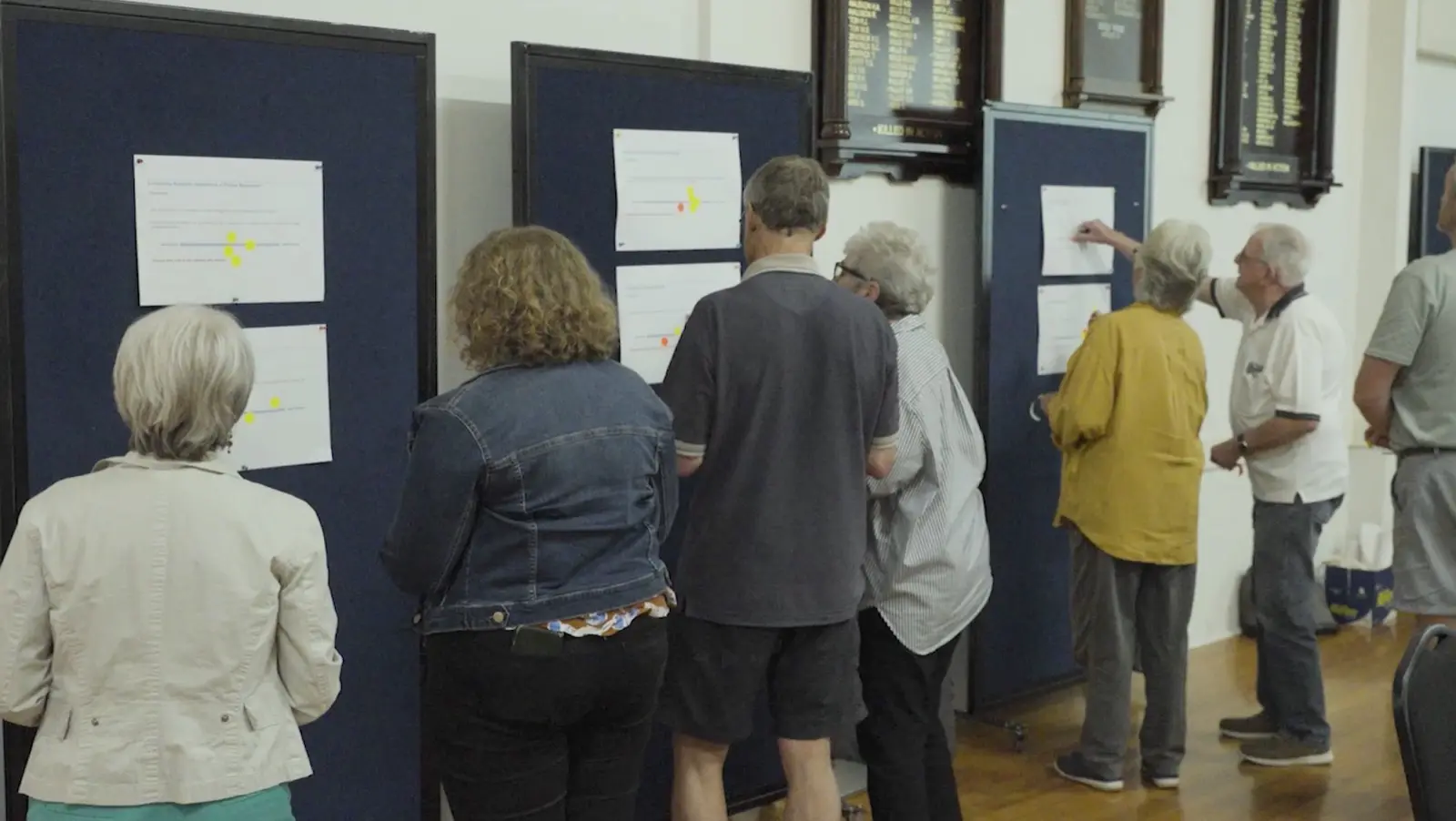
When a wind farm, transmission line, battery or solar project is proposed near a town, the first video people see shapes how they feel about everything that follows. Too often it's a glossy piece with drone shots, music and a lot of words like "exciting" and "opportunity". The people who live there have seen it before, and they stop listening.
A consultation video that works is plainer than that, and much more useful.
Start with the questions people are asking
Before planning a single shot, list what the community wants to know. Usually it's some version of: what's being built, where exactly, how big, for how long, what will I see and hear, what happens to the roads, who do I talk to, and what's still up for discussion. Your community engagement team already hears these at every information session. The video should answer them, in that order of importance, not in the order the project team would like.
Choose who speaks
The project's own people, not a presenter. A local project manager or community liaison officer that people can meet at the next session carries more weight than any voiceover. Where technical detail is needed, an engineer who can explain it plainly. If landholders or locals are willing to say why they're involved, that helps too, but only if it's their own words.
Show the real place
Film the actual site, the actual roads and the view from where people live, not a render from an angle nobody will ever stand at. Aerial footage helps people picture scale and location. Where something isn't built yet, a simple map or graphic is more honest than an artist's impression that looks finished.
Don't pretend everyone agrees
If some people in the community are worried or opposed, the video shouldn't hide it. Name the concerns that keep coming up and show what the project is doing about them, or say plainly that a decision hasn't been made yet. Acknowledging a concern costs nothing. Ignoring one costs trust.
Consent and comfort
Everyone who appears on camera signs a release. Landholders approve filming on their property. Nobody is filmed who isn't comfortable, and nobody's words are edited to say something they didn't mean. That isn't only good practice, it's what makes the video believable.
Where to share it
- The project website, near the top, not three clicks deep.
- Information sessions, on a screen in the room.
- Local Facebook groups and the council's channels, in short cutdowns.
- Letterbox drops and posters with a QR code.
Plan the next one now
A consultation video is the start of a conversation, not the whole of it. Plan the follow-up videos (what we heard, what changed, construction updates) at the same time, so the community sees the project keep its word.
See how we make community and stakeholder engagement videos, or read about planning a year of project updates.